
Routing is solved. Getting inside is not.
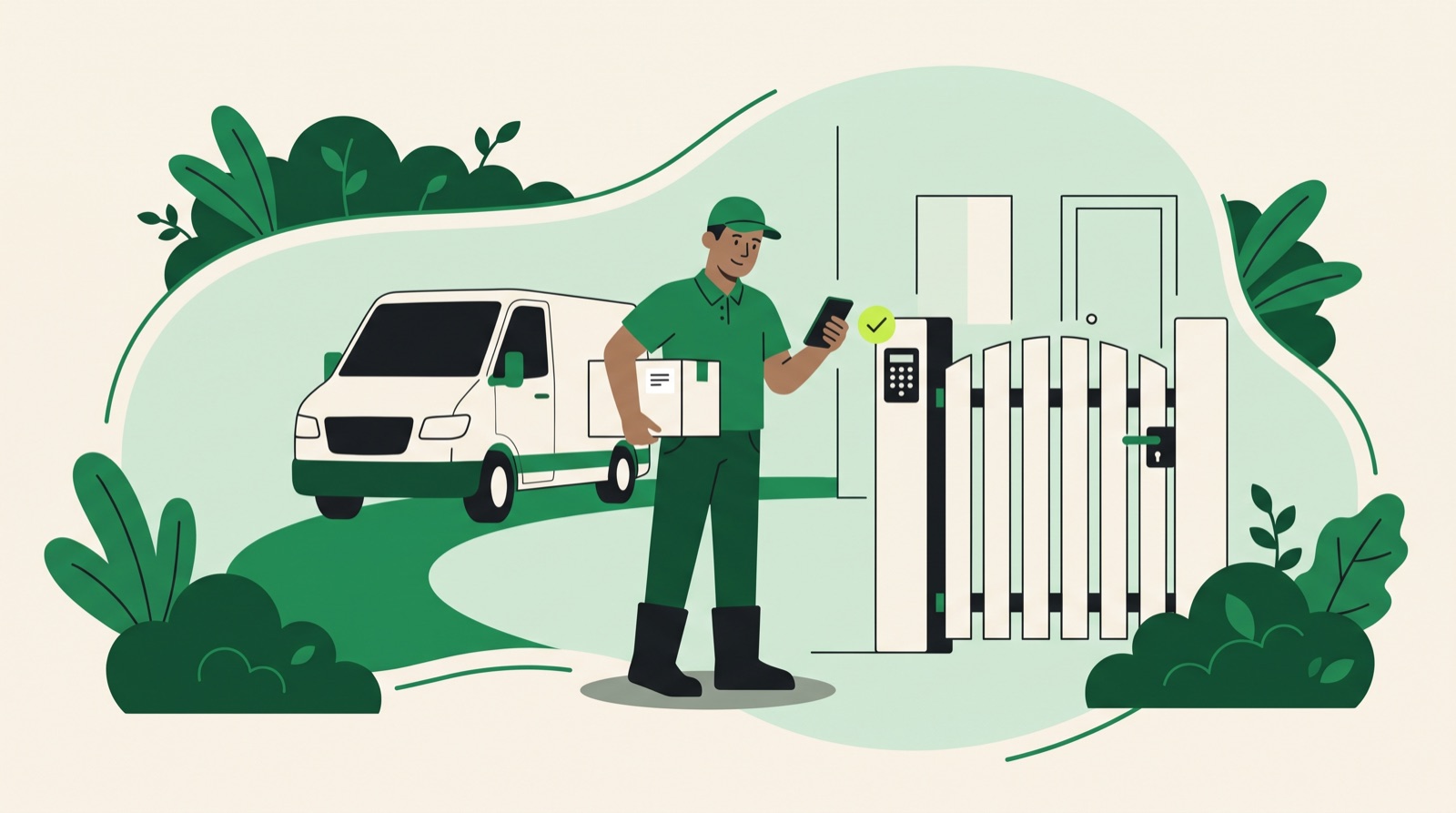
The route was perfect. The stop still took twenty minutes.
Route optimization software will tell your driver the fastest way to a job. It will not tell them the gate code, whether the customer is even home, or which of the three loading docks actually accepts deliveries after 2pm. That gap — between "arrived at location" and "job actually done" — is where field operations lose the time that routing was supposed to save.
Ask anyone running delivery, HVAC repair, insurance inspection, medical sample pickup, or FMCG field sales, and they will not describe their problem as "last-mile logistics." They will describe a specific stop: the driver circling a compound looking for the right entrance, the technician waiting at a locked gate for someone to buzz them in, the inspector standing outside a house because the appointment window meant nothing to the person inside.
Routing is mostly solved. Getting inside is not.
The map layer of field operations has gotten good. Most platforms can find a reasonable path between ten stops. What they don't carry is the situational knowledge that actually determines how long a stop takes: the access code from last time, the note that the security desk needs an ID, the fact that this particular customer is never home before noon.
That knowledge usually lives in one dispatcher's head, or in a text thread nobody can search later. When that person is out, or the job gets reassigned mid-route, it's gone, and the next driver relearns it the hard way — standing at the same gate.
This is also where compliance quietly breaks down. A technician without a current certification, a driver who's been at a site past the allowed hold time, a sample that missed its temperature window — none of that shows up on a route map. It shows up after the fact, when someone is trying to explain what happened.
What actually needs to be captured
The fix isn't a better map. It's treating the moment of arrival — and the moment of completion — as data worth keeping, not just a pin that turns green.
That means:
- Proof at the point of contact. A photo, a signature, a code entered on-site, with a timestamp attached. Not "delivered" as a status, but evidence of delivery.
- Access details that travel with the job, not with the person who took the call. Gate codes, dock instructions, "ask for Priya at the front desk" — attached to the address, visible to whoever shows up next.
- A record you can replay. When a customer disputes a delivery time or an inspector's report gets questioned, the useful answer is the actual route, timing, and evidence for that job — not someone's memory of it.
None of this is complicated to describe. It's tedious to build well, which is why most teams end up with some combination of a routing app, a group chat, and a spreadsheet — and why the twenty minutes at the door never shows up in anyone's efficiency report.
What this looks like day to day
OkPilot's field app puts job details, navigation, and access notes in one place for whoever is on-site, and captures proof — photo, signature, code — as part of finishing the job, not as a separate step someone forgets. Customers get a live tracking link with an honest ETA, so "running late" is visible instead of a surprise. And every job leaves a replayable record: route, timing, and evidence, in case anyone needs to ask what actually happened.
None of that makes the gate open faster. It does mean the information needed to open it isn't sitting in someone's head, or lost when the job gets handed off.
If your team is 5 or more people out in the field — delivering, repairing, inspecting, collecting, or selling — and you're fairly certain the real time loss isn't on the road, it's worth looking at what's happening at the door. Book a demo to see it against your own routes.