Delivery note, proof of delivery, bill of lading: which is which
In short
A delivery note lists what is in the shipment. A proof of delivery records that somebody received it. A bill of lading is a contract between the shipper and the carrier. The three terms get used as if they mean the same thing, and they do not.
| Document | Who creates it | What it proves |
|---|---|---|
| Delivery note | The sender | What was meant to be in the shipment |
| Proof of delivery | The driver, at the door | That it arrived, when, and who took it |
| Bill of lading | The carrier | The terms of carriage, and title to the goods |
| Proof of receipt | The recipient | That they accepted it |
- A delivery note is a claim about intent, a proof of delivery is evidence of an event, and a bill of lading is a contract. Only one of the three is evidence.
- For a short order, check the delivery note. A signature does not help, because it covers the box, not the contents.
- For "nothing arrived", you need the proof of delivery, and ideally a photo rather than a signature.
- For damage in transit, the bill of lading decides it — it is the contract, and it says who carried the risk at the moment the damage happened.
- If you deliver your own goods with your own team you probably do not need a bill of lading at all. It exists because a third-party carrier is involved.
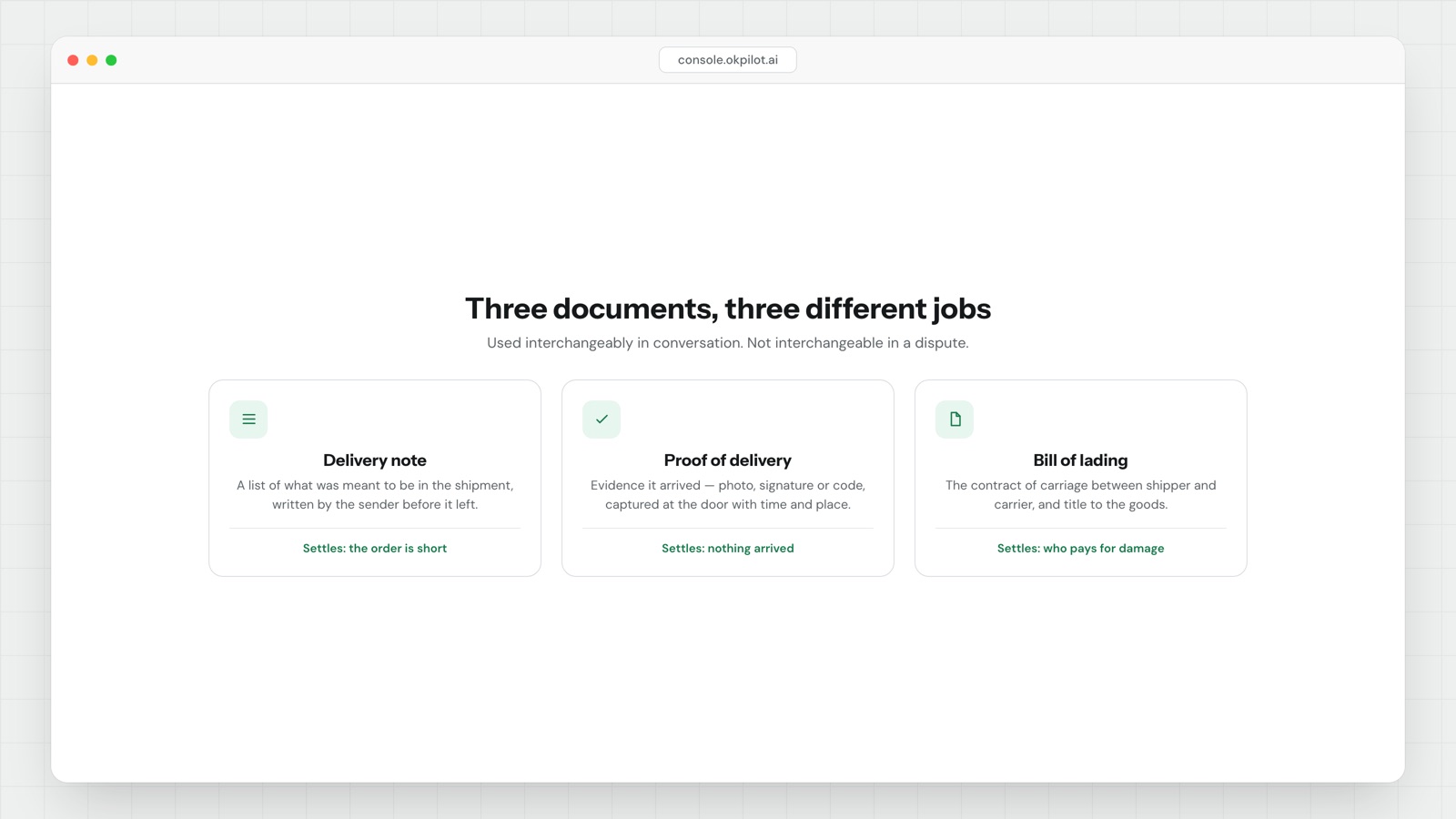
Three documents, three different jobs
A delivery note lists what is in the shipment. A proof of delivery records that somebody received it. A bill of lading is a contract between the shipper and the carrier. People use the three terms as if they mean the same thing, and then discover in a dispute that they do not.
| Document | Who creates it | What it proves |
|---|---|---|
| Delivery note | The sender | What was meant to be in the shipment |
| Proof of delivery | The driver, at the door | That it arrived, when, and who took it |
| Bill of lading | The carrier | The terms of carriage, and title to the goods |
| Proof of receipt | The recipient | That they accepted it |
When the difference bites
A customer says the order is short. The delivery note is what you check — it lists what was packed. A proof of delivery showing a signature does not help, because the signature covers the box, not the contents.
A customer says nothing arrived. Now the delivery note is useless; it only says what was supposed to happen. You need the proof of delivery, and ideally a photo rather than a signature.
Goods are damaged in transit and you need the carrier to pay. Neither of the above settles it. The bill of lading is the contract, and it decides who carried the risk at the moment the damage happened.
The pattern: a delivery note is a claim about intent, a proof of delivery is evidence of an event, and a bill of lading is a contract. Only one of the three is evidence.
Which ones you actually need
If you run your own field team and deliver your own goods, you probably do not need a bill of lading at all — it exists because a third-party carrier is involved. What you need is a delivery note that is accurate and a proof of delivery that is more than a scrawl.
If you hand off to a courier for any part of the journey, you need all three, and the handover point matters more than the paperwork. That is where liability changes hands.
The honest version
Most small operations get by on a delivery note and a signature, and most of the time that is fine. It stops being fine at the point where a single disputed order costs more than the time it would have taken to photograph the doorstep.
There is no clever threshold here. If you have had that argument twice this quarter, you are already past it.
OkPilot captures photo, signature or code as part of finishing the job, so the evidence exists before anyone asks for it.
See OkPilot running your own operation
A live walkthrough with a real person, configured to your jobs on the call. About ten minutes. Setup takes around 48 hours.